

Grapevine Canyon · 1880s to now
Ranch history
The same 800 acres has been a Mormon homestead, a mining camp, the headquarters of a million-acre cattle outfit and a champion roper's spread.
The land
Why anyone settled here
Water is the reason. Natural springs near Grass Springs made the canyon worth holding, and everything since follows from that: a homestead, a mining operation processing gold ore, a cattle range, and a stretch of the Mormon Trail that pioneers used crossing into northern Arizona.
The stone cabins the miners built are still on the property in pieces. The ranch sits in Grapevine Canyon between the Music Mountains and the southern edge of the Grand Wash Cliffs, twelve miles from the entrance to the Grand Canyon West Rim.
The record1880s – today
Four owners, a century and a half
- 1880s
Wellington Starkey homesteads the canyon
Starkey (1853–1894) established the land as a Mormon ranch in the late 1880s, using the springs near Grass Springs to keep it running. The miners' stone cabins became part of his homestead once they left. He is remembered as generous, as a great rustler, and as a man determined to keep his family provided for. One of the ranch's cabins carries his name.
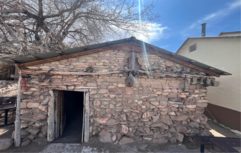
Remains of one of the ranch's original stone cabins - 1889
The Ghost Dance reaches the Hualapai
The Ghost Dance was a spiritual movement that began in 1889 and spread across the American West, inspired by the Paiute leader Wovoka. The local Hualapai took part during a period of land loss and cultural upheaval, dancing to bring back the dead, restore traditional life and see the settlers leave. It unsettled the miners working the area, and shortly after the first Hualapai Ghost Dance, the mining here stopped.
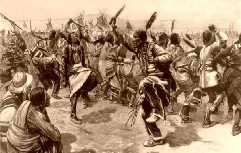
Ghost Dance of the Oceti Sakowin, print from a wood engraving, 1891 - 1910
Tap Duncan founds the Diamond Bar
George “Tap” Duncan (1869–1944), a Texas-born cowboy known as a rider and a marksman, moved his family to Arizona after a fatal barroom fight in Idaho in 1898. In 1910 he bought land from the Starkey family and founded the Diamond Bar Ranch, building it into one of northwestern Arizona's largest cattle operations, eventually spread across more than a million acres. His outlaw reputation came mostly by association: ties by marriage to Black Jack Ketchum, and a connection to Harvey “Kid Curry” Logan of the Hole-in-the-Wall Gang. He ran it until his death in 1944.
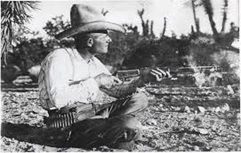
Portrait of George “Tap” Duncan of the Diamond Bar Ranch - 1956
A world champion roper buys the Diamond Bar
Dale Smith (1928–2014), world champion calf roper, bought the ranch in 1956 and ran it as a working cattle and horse operation for nearly five decades. He built grazing practices meant to hold the land as well as the herd, and put his rodeo background into the horsemanship side of it.
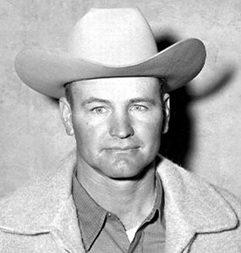
Portrait of Dale Smith, world champion calf roper and Diamond Bar owner - Today
Grand Canyon Western Ranch
When Smith sold, the cattle drive ended and the guest ranch began. The cabins, the bison on Sunset Hill, the ranch house dinners and the campfire are the working ranch adapted rather than replaced. Guests ride the same desert trails, take a wagon along the Mormon Trail and sleep in pine cabins where the miners' stones are still visible down the canyon.
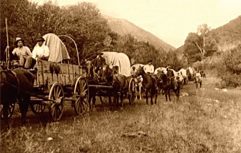
Archive photograph of a wagon train on the Mormon Trail


Still here
Mountain bison on Sunset Hill

The ranch keeps a herd of mountain bison on the property. The sunset horseback ride and the covered wagon ride both come up to Sunset Hill, where the herd grazes with the Grand Wash Cliffs behind it.
Animals that once crossed these plains by the million, standing in the same landscape.
Sleep on the land you just read about
Cabins from $250 a night, glamping from $239, and a campout you ride out to.